


[singlepic id=12 w=320 h=240 float=left]Cover Artist: Yuki Horiki
Title: Element of a Green Guardian II
Medium: Oil on canvas
Contact:
Feature Article
Finding Joy Wherever You Are
Recently I read an article about a community of around 500 people who live on a rubbish dump in Cambodia. The article was based on the experience of Spanish photo-journalist Omar Havana, who spent seven months during 2010 and 2011 getting to know the people at the dump and documenting their lives.
 “I have to be honest,” he says, “I didn’t find that place sad. I was happy every time that I was with the people living there. Most of the children are aged between three and 15 and they are always smiling. One day a little boy carrying a bag of blood asked me why the people in my country never smile. I didn’t know what to answer. While he looked at the blood he was carrying as a treasure to eat, he explained to me, ‘I smile all the time, I’m lucky. Today I’m going to eat this and tomorrow I will see the sun again’.”
Reading this article got me thinking about joy. Is joy dependent on our circumstances? Can we intentionally generate joy? Are some people more naturally joyful than others? Take a little while right now to recall a time when you have experienced pure joy… Some years ago, I and a friend, Lesley Moseley, wrote a book on the subject of recovering from painful, unsought life change. We had both experienced such events, had each eventually come to a place where life felt good again, and wanted to share the steps that had helped to bring about this transition.
One of the later steps related to joy. We identified three things that, together, can generate an experience of joy:
• Being in the present moment,
• Being open to joy, and
• Adopting an attitude of gratitude.
Being in the present moment
It’s probable that the joy you recalled just now occurred when you were fully in the present moment. We experience joy when we respond spontaneously, without thought, to something in our external or internal environment: the sight of a bright flowering tree; hearing beautiful music; unexpectedly meeting a much loved old friend; hearing or seeing something funny enough to burst into laughter.
It can be interesting to monitor your thoughts for an hour or two as you go about routine, automatic tasks. It’s likely that many of your thoughts will relate to the past (recalling, savouring, perhaps regretting or feeling guilty about past events) or the future (anticipating, worrying about or mentally rehearsing for things that haven’t yet occurred). While we are focused on the past or future we are largely oblivious to what is going on right here and now. Being in the present moment means being fully focused on whatever we are doing, and on what we can see, feel, hear, smell etc within and around us right now. Our lives, including our relationships, have far more colour, intensity and potential joy when we experience them deeply through being fully present.
Being open to joy
Are you generally a ‘glass half full’, or a ‘glass half empty’ person? If the latter, you might need a little practice to begin expecting joyful events. Some people’s childhood experiences have led them to expect the worst – to be always on guard in case something bad happens, so their focus is on the negative. If you can relate to this, it’s important to recognise that your childhood is past, and that you can change your attitude. Monitoring your thoughts again for a day or so is a good way to start. This will give you an idea of the sorts of thoughts you habitually entertain, which lead you to expect the worst. What we focus on increases. It’s important to change a pessimistic pattern of thinking, as this will continue to bring into your life things that seem negative to you, and you won’t notice those things that are positive.
So whenever your inner peace is disturbed, ask yourself, “What was I just thinking?” Recognise that dwelling on this thought will only bring you pain, so ‘cancel’ it immediately and replace it with a positive affirmation. (I use, ‘I choose peace and joy’, but choose something positive that feels good to you).
Adopting an attitude of gratitude
What is your response when something good happens after a long struggle? Examples might be getting a few days work after a period of unemployment or beginning to recover after a lengthy illness. Often, we counteract an initial positive response with ‘but …’: ‘but it won’t begin to pay my debts’; ‘but I’m nowhere near as well as I used to be’. That word ‘but’ cancels out any joy that we might have experienced. Feeling unreservedly grateful for each tiny positive happening affirms that life is good and opens the door to joy. Acknowledging the positive things in your life and developing an attitude of gratitude for these things is enough to keep the joy flowing.
By being present and opening our awareness to life’s potential for joy we open ourselves to joy, and by adopting an attitude of gratitude we can retain it.
Annabel Muis. annabel.muis@internode.on.net References: www.omarhavana.com Turning Points, Regaining joy after loss, Annabel Muis and Lesley Moseley
Regular Article
Therapy of the Month – Living Homeopathy
When I tell people that I am a homeopath I get various responses, ranging from total puzzlement to informed interest. This article is about homeopathic medicine and how it has become a worldwide medicine.
Samuel Hahnemann
The founder of homeopathy, Samuel Hahnemann, was born in Leipzig, Germany, in 1755, and was a doctor when he was 21. While translating a paper describing the effects of quinine on malaria, Hahnemann decided to take a dose of quinine to test its effect on a healthy person. The result of this experiment was that Hahnemann developed some of the common symptoms of malaria. He became dehydrated, developed bloating of the abdomen, symptoms of food poisoning and many other symptoms. How could it be that the medicine known to cure malaria also caused the symptoms?
The Doctrine of Similars
Dr Hahnemann postulated that the symptoms of a disease actually demonstrate the body’s efforts to rid itself of a disease. Hahnemann proposed that a very dilute form of a medicine that closely copies the symptoms of a disease may be able to speed up the curative process. This would push out the disease more quickly than the body could unaided.
If a medicine could stimulate the body to drive out the symptoms of disease and leave the person well it would be an advantage. Wouldn’t it? But wouldn’t it be dangerous to introduce something into the patient’s system that was known to cause disease? No! Not if the substance was so dilute that it was totally harmless.
So Hahnemann developed a system of diluting the medicine and succussing (shaking) it until it was deemed to be harmless. Symptoms were not therefore the disease itself but signs that the organism was striving to return to health.
Homeopathic Medicine
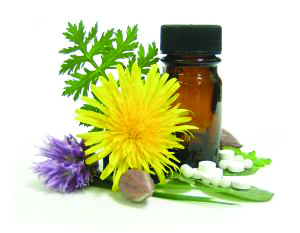 The homeopath’s task is to observe the patient, evaluate his or her symptoms, and to decide on a homeopathic remedy that best fits the patient’s condition. The initial interview often takes an hour or longer, and then the homeopath uses this information to decide on the best remedy for this person in their present state. This ‘in depth’ interview examines the patient’s present symptoms in detail, his health history and family history, and an exploration of her mental and emotional state, diet, sleep patterns and so on, until the homeopath has as complete a picture of the patient as possible. Then the practitioner has to decide on the one remedy that would best fit the patient’s present state and past health history.
The homeopath also prescribes the amount that the patient should take. Quite often this will be little white pills or doses, sometimes as few as two or three. Sometimes, especially when prescribing for children and young people, they may prescribe just one pill; results become evident very quickly because homeopathic medicine treats the whole person by stimulating their total defence mechanism.
A World-wide Medicine
Homeopathy spread rapidly from Germany to become a world-wide medicine. It is popular in France, the United States, the UK and India. There are estimated to be almost a million homeopathic practitioners in South East Asia. Homeopathy is growing rapidly in Australia.
Homeopathy in the Home
There are one or two homeopathic remedies that should be available in every household:
1. Arnica Montana. This remedy stops bleeding and prevents bruising. If someone suffers a fall, or a cut or bruising one Arnica tablet should be dissolved under the tongue as soon as possible.
2. Aconitum Napellus. This remedy is excellent for young children who develop a sudden fever from a chill. The fever usually comes on after midnight.
3. Belladonna. Reduces temperature, throbbing headaches and hot, dry red skin, with burning heat.
4. Allium cepa. Hayfever mainly affecting the nose and eyes, as if you have been peeling an onion.
Buying Homeopathic Remedies and Understanding Potencies
Many pharmacies stock a range of homeopathic remedies, and often include those listed above. Homeopathic medicine tends to be sold as little white pills and they all look the same. So it is very important to ask the pharmacist or your local homeopath to recommend a remedy for whatever condition you want to treat.
The remedies are marked according to their potency. For example, most pharmacies stock remedies in the 6c or 30c potency. The number indicates many times the original substance has been diluted and succussed. At first the original substance is diluted with 100 drops of water and alcohol, and shaken 100 times. This becomes the Mother Tincture. At the next stage one drop of the mother tincture is added to 100 drops of water and alcohol and shaken 100 times. This would be the 01 potency.
For potency number 6 the process will have been carried out 6 times, and for potency number 30 it will have been carried out 30 times. Put another way, the 6C potency represents a dilution of 1/1,000.000,000,000, and indicates that there is nothing of the original substance remaining in the medicine. It has already been recently proved scientifically that water has a memory. Homeopathically, the original memory is still left in the mixture.
Effectiveness
Millions of people find homeopathic medicine to be effective. The lower potencies of 6C or 30C are recommended for use in the home and for acute conditions, but unless you have some experience of using homeopathic medicines it soon becomes necessary to find out more about how to use it. The best advice would be to get hold of one of the many books available on homeopathic medicine, or, better still, contact a local homeopath and ask their advice.
For The Festive Season
Nux Vomica. Over indulgence in alcohol and rich food. (Hangover)
Calcaria Carbonica. Much wind and distension of the abdomen after rich food.
Pulsatilla. Indigestion after rich food; fear of being alone; in need of sympathy.
Carbo Vegetablis. Much wind, up and down, especially after rich, fatty food.
Arsenicum Album. Diarrhoea; suspect food that has upset the system.
Written by Emlyn Thomas RSHom DPhysEd. and Christine Borcovsky RSHom. Homeopaths in Cairns.