


 Cover Artist: YOKO
Title: Orange Girl
Medium: Acrylic on canvas
Contact: pingara@live.jp.
FEATURE ARTICLE
Loving Karma
Well, doesn’t that word ‘karma’ strike fear into your heart and leave you shaking in your boots? It is just as powerful as the whole ‘fire, hell and damnation’ sermons I used to hear when growing up.
But you know, once I reached my forties I suddenly realised that the fear surrounding the work ‘karma’ had gone. Really, in its simplest form, karma means consequence or outcome, depending on the type of action initially or originally taken. So it could be a negative, or as those in positions of power don’t like to tell you:
Karma can be a positive, beautiful experience.
So I made the conscious decision to only focus on having positive karma in my life.
So how do you attract positive karma into your life? You ATTRACT beautiful, joyous karma through living your life consciously and sending light and love out to everyone you meet.
Tips for creating positive karma:
 Kindness
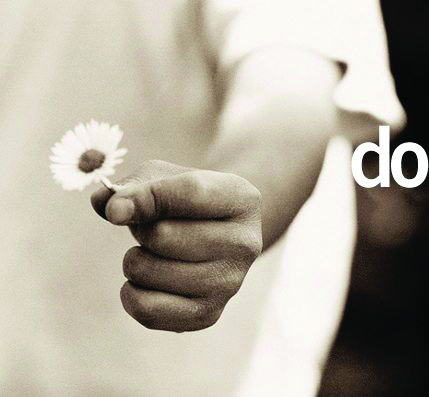
Be kind to yourself and those around you. The ways to be kind are endless: check on your neighbours, stop and ask the person looking lost on the street if they are ok, offer the hand of friendship to the newcomer. Put your listening ears on and talk with your kids, ask them about their dreams and fears; the world can be a really scary place growing up. As an adult you have a significant influence on whether your children blossom or wither away.
Random acts of kindness are awesome; your opportunities are limitless.
Gratitude
Be grateful for every experience that you have; even the not-so-great ones always have a rainbow hiding in the shadows if you are willing to look for it. Be grateful for all that you have every day e.g. a roof over your head, clean drinking water, air free from pollution, the freedom to be whatever you want to be.
 Unconditional Love
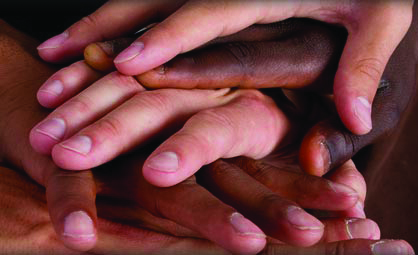
Treat everyone as you wish to be treated, be joyous in all your undertakings and relationships. Hug someone every day. If you want a great teacher on unconditional love spend some time with an animal – they give love freely, expecting nothing in return.
Smile
Yes. That’s right it is so simple. Smiles make you happy!! They change your outlook and as a result you act in a more positive, loving way. Have you ever seen a stranger turn down a smile? Sure, they might look surprised and turn away, but I can assure you that a couple of metres further down the street there will be a smile spreading over their face.
 Breathe
Before you react to the driver who is trying to get into your lane – yes I know you were up all night with children and now you are running late for work, and how dare he think he has the right to be in your space – breathe; nice, slow, gentle breaths and feel your hands relaxing on the steering wheel, and the urge to scream obscenities disappearing. Why send your blood pressure through the roof and allow your ego’s overwhelming need to be ‘right’ to cause you to act out of anger? Instead be gracious and happily let them in.
Learn to step back from the emotion and drama: breathe; observe without judgment and send light and love to the person or situation; forgive yourself, and smile.
Give back to the community
Become a volunteer – the social and health benefits for the volunteer and those you are helping are amazing. If you are extremely time poor and you have the financial means, donate to a non-profit organisation or cause that you are passionate about. Reduce your impact on the environment through reduce-reuse-recycle. Shop locally, support the people who support your community; small businesses are always being asked to donate goods or services for fundraising efforts for local community projects.
We are all human. We all have bad days, and we have all done things where we have hurt someone or we haven’t handled a situation very well. Forgive yourself, and focus on taking a step at a time to move forward, and live your life consciously.
Attracting positive karma is not about gaining brownie points. It is about reminding you to live your life treating everyone and everything the same way you would like to be treated i.e. with respect, love, and understanding.
Felicity
REGULAR FEATURE
Siddha Story – The Time, The Place and The People
In ancient times there was a king who called a dervish to him and said, “The Dervish Path, through a succession of masters reaching back in unbroken succession to the earliest days of man, has always provided the light that has been the motivating cause of the very values of which my kingship is no more than a wan reflection.”
The dervish answered, “It is so.”
“Now,” said the king, “since I am so enlightened as to know the foregoing facts, eager and willing to learn the truths that you, in your superior wisdom, can make available – teach me!?
“Is that a command or a request?” asked the dervish.
“It is whatever you make of it,” said the king, “for if it will work as a command, I shall learn. If it operates successfully as a request, I shall learn.”
And he waited for the dervish to speak.
Many minutes passed, and at length the dervish lifted his head from the attitude of contemplation and said, “You must await the ‘moment of transmission’.” This confused the king, for, after all, if he wanted to learn he felt he had a right to be told, or shown, something or other.
The dervish left the court.
After that, day after day, the dervish continued to attend upon the king. Day in and day out the affairs of state were transacted, the kingdom passed through times of joy and trial, the counsellors of state gave their advice, the wheel of heaven revolved.
‘The dervish comes here every day,’ thought the king each time he caught sight of the figure in the patched cloak, ‘and yet he never refers to our conversation about learning. True, he takes part in many of the activities of the Court; he talks and he laughs, he eats and he, no doubt, sleeps. Is he waiting for a sign of some kind?’ But, try as he might, the king was unable to plumb the depths of this mystery.
At length, when the appropriate wave of the unseen lapped upon the shore of possibility, a conversation was taking place at court. Someone was saying, “Daud of Sahil is the greatest singer in the world.” And the king, although ordinarily this sort of statement did not move him, conceived a powerful desire to hear this singer.
“Have him brought before me,” he commanded.
The master of ceremonies was sent to the singer’s house, but Daud, monarch among singers, merely replied, “This king of yours knows little of the requirements of singing. If he wants me just to look at my face, I will come. But if he wants to hear me sing, he will have to wait, like everyone else, until I am in the right mood to do so. It is knowing when to perform and when not to that has made me, as it would make any ass that knew the secret, into a great singer.”
When this message was taken to the king, he alternated between wrath and desire, and called out, “Is there nobody here who will force this man to sing for me? For, if he sings only when the mood takes him, I, for my part, want to hear him while I still want to hear him.”
It was then that the dervish stepped forward and said, “Peacock of the age, come with me to visit this singer.”
The courtiers nudged one another. Some thought that the dervish had been playing a deep game, and was now gambling upon making the singer perform. If he succeeded, the king would surely reward him. But they remained silent, for they feared a possible challenge.
Without a word the king stood up and commanded a poor garment to be brought. Putting it on, he followed the dervish into the street. The disguised king and his guide soon found themselves at the singer’s house. When they knocked Daud called down,
“I am not singing today, so go away and leave me in peace.”
At this time the dervish, seating himself upon the ground, began to sing. He sang Daud’s favourite piece, and he sang it right through, from beginning to end. The king, who was no great connoisseur, was very much moved by the song, and his attention was diverted to the sweetness of the dervish’s voice. He did not know that the dervish had deliberately sung the song slightly off-key, in order to awaken a desire to correct it in the heart of the mastersinger. “Please, please, do sing it again,” begged the king, “for I have never heard such a sweet melody.”
But at that moment Daud himself began to sing. At the very first notes the dervish and the king were as men transfixed, and their attention was riveted to the notes as they flowed faultlessly from the throat of the nightingale of Sahil. When the song was finished, the king sent a lavish present to Daud. To the dervish he said, “Man of Wisdom! I admire your skill in provoking the Nightingale to perform, and I would like to make you an adviser of the court.”
But the dervish simply said, “Majesty, you can hear the song you wish only if there is a singer, if you are present, and if there is someone to form the channel for the performance of the song. As it is with mastersingers and kings, so it is with dervishes and their students. The time, the place, the people and the skills.”
Universal Storyteller