

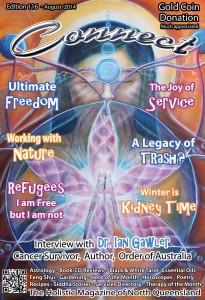
 Cover Artist: Donna Raymond
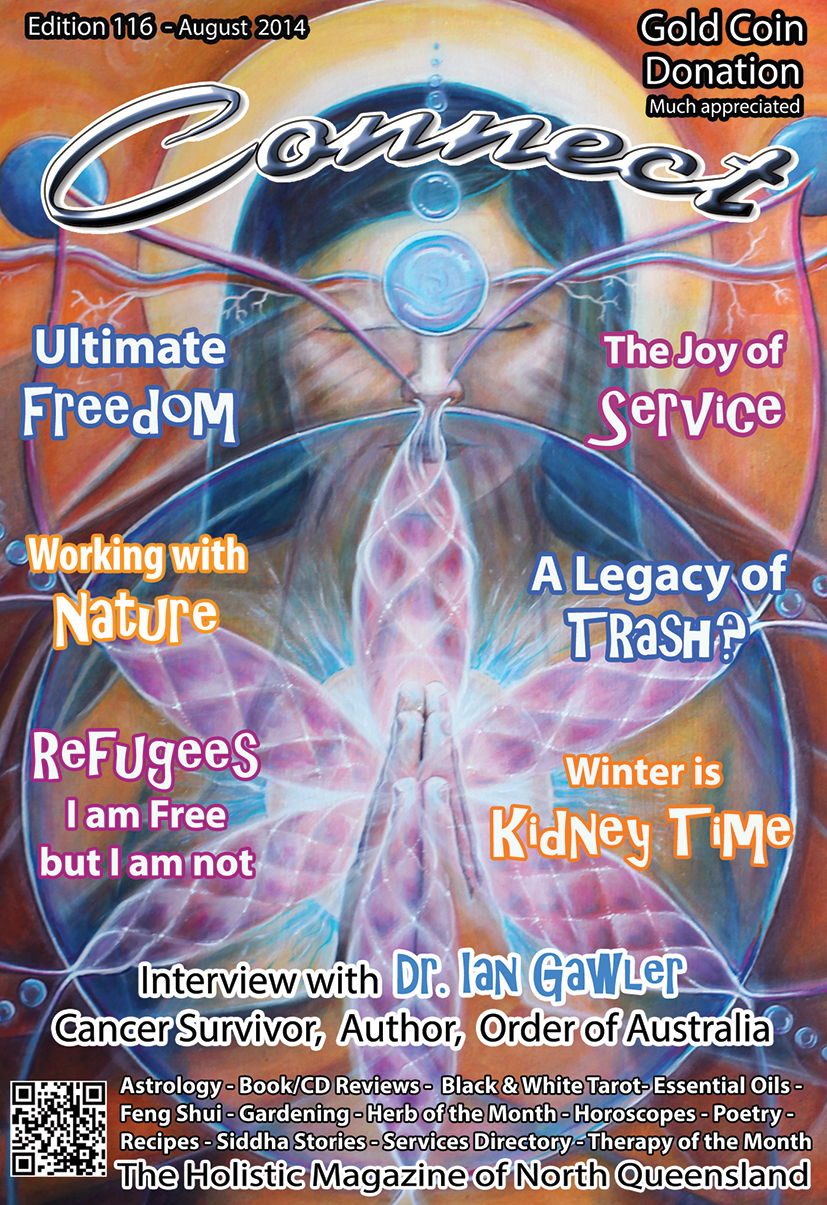
Title: Sigillum Sapientia et Virtus: The Seal of Wisdom and Truth
Medium: Acrylics
Contact: www.DonnaRaymond.com.au
As an artist I wish to bridge the gap between the known and the unknown…the sacred dance of perceived dualities and complexities of the heart and mind. Creative expressions come from a place deep within the realms of consciousness, everyone is an artist in some way or another! I feel these works come through me…not from me!
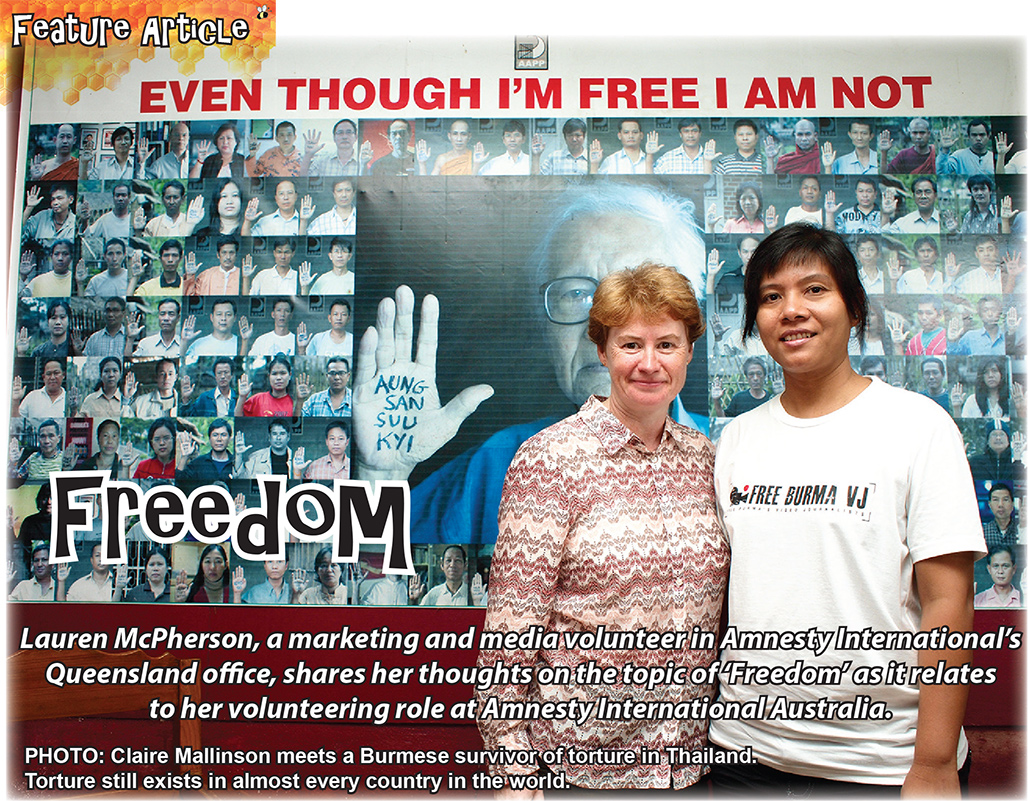
Freedom: the word itself means many things, to many people. It inspires images of rolling plains and open seas, feelings of joy and contentment, and the idea that you, as an individual, are exactly as you are meant to be. You are free.
It is for this reason that Amnesty International, and all those who support the United Nations Declaration of Human Rights, perceive freedom as a basic human right: freedom of speech, of movement, of opinion, of appearance. The freedom to follow the faith you believe in, to love who you will, to work as you desire without fear of persecution or discrimination.
I support Amnesty International because I believe in a world where people can be free to flourish and develop, as individuals, as a society and as members of the human race.
 Amnesty International began in 1961 with a single letter: a protest against the restriction of speech and opinion in Portugal, where two students were imprisoned for raising a toast to freedom. Peter Benenson’s letter, published as ‘The Forgotten Prisoners’ in the UK’s Observer, sparked an international outcry against the incarceration of prisoners of conscience. These are individuals who are jailed for their beliefs, their opinions, or their work in the community.
While the work of Amnesty International has expanded to many other human rights areas over the years, the defense of prisoners of conscience and individuals at risk remains one of the fundamental cornerstones of Amnesty’s work. Amnesty International assists those in need all over the world by placing pressure on those in power to improve the situations of those who have been denied their rights. That aim is twofold: to defend the individuals who are experiencing a violation of their human rights, while working to change the systemic issues that allow such violations. Amnesty works to make the preservation and respect of human rights a concern of people everywhere, because the need for freedom is fundamental to the human condition.
Sadly, thousands of people, all over the world, are at risk of, or experiencing, human rights violations every day. Men, women, and children face discrimination, violence, imprisonment or even death for exercising their right to freedom. While it may seem that this denial of basic human rights would only occur in countries that face major conflict or institutional instability, these violations are, right now, occurring in our own backyard.
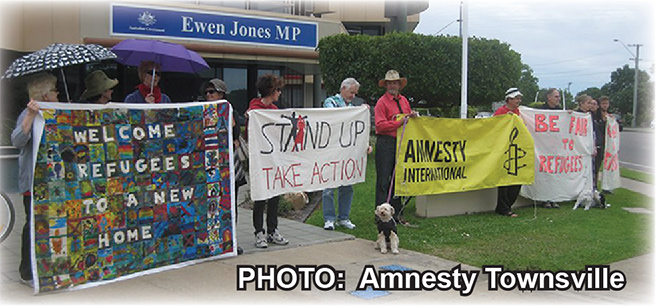 We in Australia face several issues that impinge on individuals’ right to freedom, such as the health and education gap affecting Aboriginal and Torres Strait Islander Peoples, discrimination against the LGBTIQ community, and widespread violence against women.
One of the greatest human rights crises in Australia is our appalling policies around people fleeing persecution and claiming asylum from Australia. The Declaration of Human Rights states that all people have a right to seek asylum from persecution in other countries. But Australia’s policies, such as returning asylum seekers to the hands of the dictatorial governments they are fleeing; or incarcerating men, women and children in horrendous conditions in detention centres, is in violation of International and Australian law by denying protection to those who genuinely need it.
The Refugee Convention, the Convention Against Torture and Other Cruel, Inhuman, or Degrading Treatment or Punishment, and several other international treaties, all state that Australia, as party to these treaties, has an obligation to protect those who request it. Australia must respect and protect their human rights, and ensure that they are not returned to a country or situation in which they face prosecution. As a country, we are obliged to uphold these obligations to all individuals who seek asylum, regardless of how they arrive, or the documents they do or do not arrive with.
The use of offshore processing, and the denial of permanent protection to those who arrive by boat is not a deterrent to people smugglers as the government claims, it is a direct violation of Australia’s international obligation to protect those in need. The people who seek the safety of our shores are not, as the media and myths would have you believe, ‘country shopping’. They are not ‘jumping the queue’. They are not terrorists. They are individuals fleeing for their lives or the lives of their families. They are often unable to seek protection through other means, such as contacting an Australian Embassy or the United Nations. A dangerous trip across the ocean is often their last and only hope of survival and safety for them and their families.
Australia’s Offshore Processing Policy is a denial of basic freedoms, and cannot be condoned by the Australian public. The secrecy surrounding the conditions of the detention centres, the evidence of abuses against asylum seekers and the emotional and financial costs not only denies the Australian public their right to freedom of information, it denies the refugees and asylum seekers held in captivity their rights to freedom, protection, and safety. Without independent assessment of the camps and situations by journalists, lawyers, or human rights organisations such as Amnesty International, we as a nation cannot know if the people we are obligated to protect are being offered the protection and security they need.
Freedom is a fundamental human right: freedom of speech; freedom from persecution; freedom to work; freedom to worship. Those who come to Australia asking for asylum also seek the freedom that is denied to them in their own countries, the freedom that we as Australians take for granted.
Lauren McPherson

It was a time of war in Turkey, when the French were fighting for control of territory against the Turkish guerrilla soldiers. A band of guerrillas was hiding out in the mountains. Up the mountain road came a peasant man with his donkey carrying a load of wood. The soldiers stopped the man and asked him where he was going with that donkey.
He said, “I’m taking my wood to the market to sell it.”
The leader of the soldiers said, “We need your donkey. How much will you sell it for?”
The man protested, “But I need my donkey to take this wood to the market.”
“Okay,” he said, “we’ll buy the wood too. How much for the wood?”
“Five dollars,” he answered. They paid him the five dollars and took the wood and dumped it on the ground.
“Now how much for the donkey?”
The peasant said, “Twenty dollars.” They gave him twenty dollars and started to walk away with the donkey.
The man ran after them, “But what about my wood?”
“What do you mean?” said the soldier’s leader. “We gave you five dollars for the wood and twenty dollars for the donkey. We don’t need the wood, we need the donkey.”
“But I spent so much time cutting the trees down and sawing these logs, and now you are just throwing them on the ground after all that work. What about my wood?”
“Look, man, didn’t you do all that work so you could sell the wood and make some money? We’re giving you five dollars for your wood and another twenty for the donkey. I don’t care how much time you spent on your wood. We paid for it and it’s ours now. But we don’t need it. We only need your donkey.”
They argued back and forth like this for a while, until finally the exasperated soldiers grabbed the donkey by the reins and hurriedly walked away.
The man stood scratching his head in bewilderment as he watched his donkey and the soldiers fade out of sight up the mountain trail. He looked down at his wood on the ground and wondered what he should do about his wood.
Universal Storyteller