


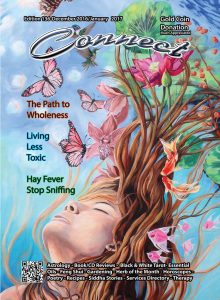
 Cover Artist: Louise Broadbent
Cover Title: All the Dreams we cannot Recall
Medium: Oil on Canvas
Size: 120 x 70cm – $1150
Contact: 61.(0) 434 460 227
www.artbylouisebroadbent.com.au
Louise Broadbent makes no claims to having received her knowledge of art from a regular art school background; she is completely self-taught having instead a university degree in science, majoring in Biology. She also sports a secondary school teaching qualification.
A love of drawing and painting has sustained her through her whole life and found expression in her preference for the mediums of pastel, watercolour, acrylics and oils.
Over the last ten years Louise has taught art to children and adults, from her beginnings in the South Australian High School System to the present day, teaching children and adults privately.
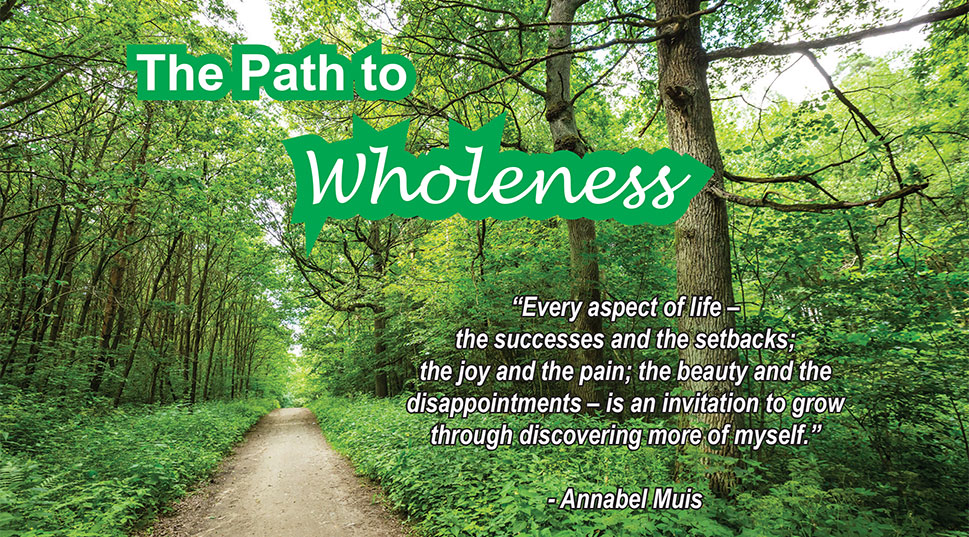
I wrote these words more than thirty years ago. A friend was in a negative state of mind over missing out on a job he very much wanted; I bought him a card, and wanted to write on it something that would be helpful. I ‘went inside’ with the intent of finding the right words for him, and these were the words that came to me. I never did get any feedback from him as to how he felt about these words. However, another friend copied them for me in calligraphy and had them framed. They live on my wall, and they have been a very valuable reminder for me at times when things seemed to be ‘going wrong’.
An old English word, ‘hal’, which meant ‘hale’ or ‘whole’, is the basis of our words, ‘health’, ‘wholeness’, ‘holy’, and even ‘hello’, which could be interpreted as, ‘I wish you wholeness/health’. So being whole is very close to being healthy – in fact the words could be virtually interchangeable in some contexts.
Stages on the path
Our journey towards wholeness could be seen as a return to wholeness, i.e. to conscious wholeness. Let’s assume that, prior to physical incarnation, the soul is in an aware state of oneness with all that is. Psychoanalyst Sigmund Freud proposed that for the first few months of life, babies don’t realise they are separate from their mother and the world around them. This is something like a feeling of oneness, but in a newborn it is not conscious awareness. Over the first couple of years of life, we newly incarnated beings begin to recognise a name, a gender, and certain recurring descriptions, and start to build a sense of a separate ‘self’.
Through our interactions with the people we have the most contact with over our early life, we learn to recognise, and eventually claim a set of qualities, abilities, beliefs and values that we identify as ‘me’. We also experience other qualities and traits that we reject as ‘not me’ – in other words they don’t fit the ‘self’ that we are developing, so we acquire strategies for ignoring or denying these, pushing them out of awareness. By early adulthood we have a relatively clear idea, or belief, about who we are.
This is not the end however; the journey has barely begun. The full journey is, in summary:
- Initially, according to Freud, we experience a kind of wholeness, or oneness with all that is;
- We develop, over time, a concept and perception of a stand-alone ‘self’, separate from the rest of creation;
- Then, throughout the remainder of our incarnation we are exposed to events and experiences that we have chosen (some would say) to assist us to consciously recognise and embrace our true oneness with all that is, while at the same time functioning as an individual in a physical environment.
Life itself is the ‘wholing’ process 
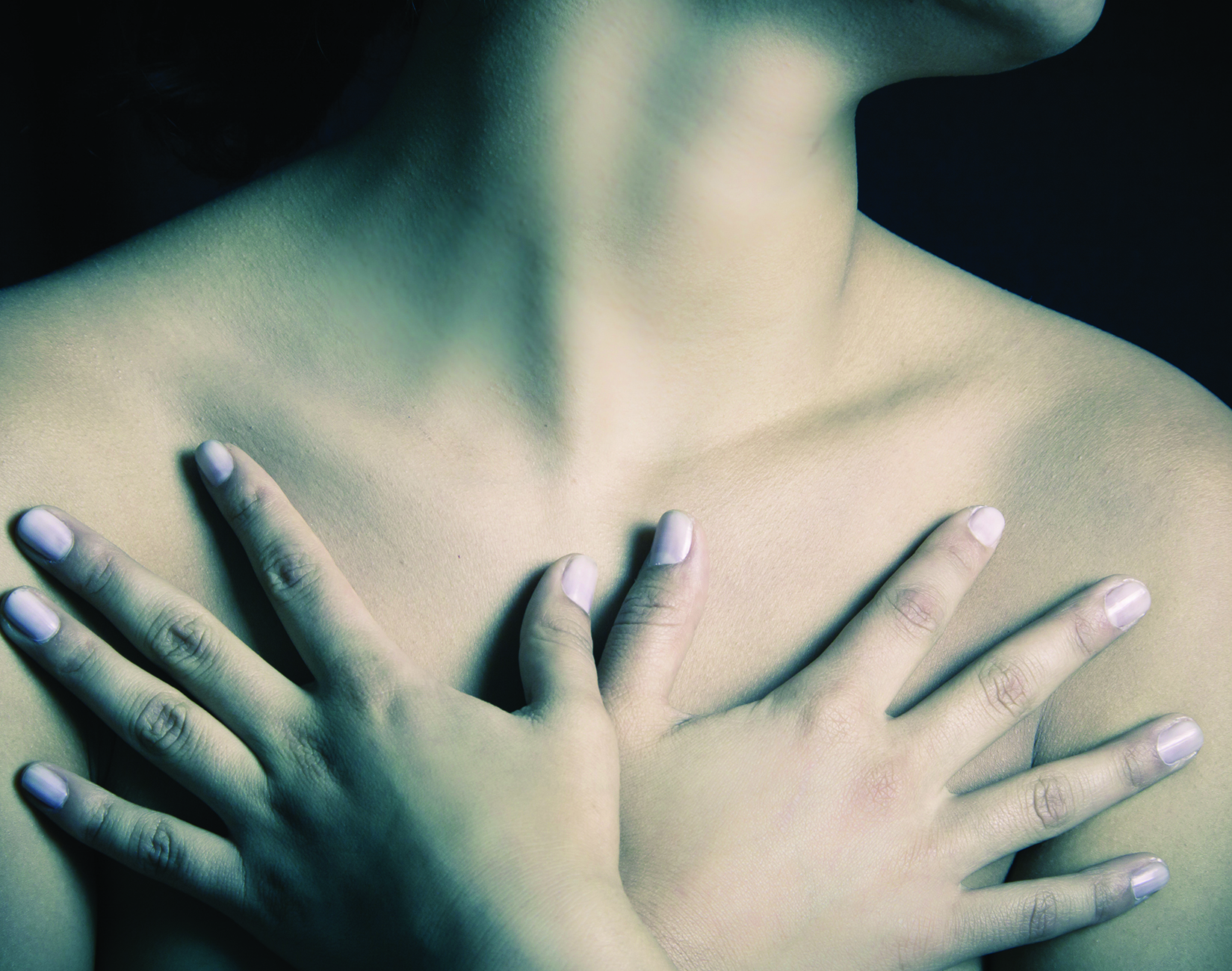
The whole of life is a healing journey, leading towards the recognition and expression of our true physical, emotional and spiritual self. Having spent our first twenty or more years learning to operate as a constructed ‘self’, we spend the next many years re-examining the parts of this self that we have ignored or rejected.
The goal of the process is acceptance and integration of all our aspects – even those that might be considered negative, unacceptable or even evil. We are all of this, and we can choose what aspects of our potential to express, and how.
Within each of us are the drive, the ability and the ‘knowing’ we require, to become whole. Intuitively we are drawn to the people, the experiences and the means by which our healing, or ‘wholing’ can occur. We can undertake this journey the hard way or the (slightly!) easier way. Doing it the hard way means not acknowledging the healing potential of life, and therefore fighting against those aspects of our lives that don’t fit our wants or expectations.
Conscious ‘wholing’
Although the journey to wholeness can at times be extremely challenging, undertaking it consciously can help to reduce the pain and relieve suffering. Some ways to do this are:
- Choose to believe and affirm that you have the drive, the ability and the knowing you require to change, grow and heal; seek help when you feel drawn to do so, but don’t give your power away to others.
- Over time, investigate, discover and nurture your own most effective ways of tuning in to your inner knowing.
- Practise staying attuned to your inner sense of what feels right for you in any situation, and follow this direction whenever possible.
- Understand that life might not always be easy. Aspects of your self that you haven’t acknowledged or dealt with, and that you might perceive as negative, must come to the surface, in order to be recognised and embraced as valid parts of your true Self. Such recognition can be uncomfortable scary and even painful.
- When something that feels unpleasant happens, even when it’s almost impossible to conceive that it could be ‘meant to be’, try not to resist what is occurring. Be still and present, allowing life to be as it is, while you wait to get a feeling about which way to proceed.
Above all, know that within every one of us is a longing for wholeness – a yearning to re-discover our true spiritual nature and experience ourselves as one with all that is. It is this force that will continue to impel us and support us along our path, until we achieve our goal.
Annabel Muis
Annabel is Reiki practitioner and master. For information about Reiki treatments or classes, phone (07) 4093 8937, or email annabel.muis@gmail.com