


COVER ARTIST: Michelle Toohey
TITLE: Sea Witches
MEDIUM: Acrylic
CONTACT: www.chellesartworks.com
FEATURE ARTICLE:
History, Genetics and Epigenetics
Did you know that your DNA does NOT control your health and who you are? When first discovered, scientists believed that the DNA was the brain of your cells – that whatever your DNA said, the rest of you would become. They believed that once they decoded all of the different genes found in people, through the Human Genome Project, they would discover genes for all manner of things including cancers and heart disease. To explain the full complexity of humans and for DNA to be the reason behind this, there needed to be about 120,000 human genes. But guess what? They finished decoding the human genome in 2003 and there are only about 24,000 human genes. There’s more to the story of what makes us tick…
So let’s make sure everyone’s on the same page with his or her biology knowledge first:
1. Your body is made up of cells. Muscles are made of cells. Blood is made of cells. Bone is made of cells. Everything is made of cells. Your body is made up of approximately 50 TRILLION cells.
2. Each cell has the same basic structure. It has an outer membrane that defines its boundary. It has a nucleus that contains your DNA. Every cell has the same set of DNA as every other cell in your body. Which bits of DNA it uses will depend on what type of cell it is.
Since we discovered there are way less genes than first expected, the field of epigenetics has grown. Epigenetics literally translates to mean ‘above the genes’. And epigenetics has shown that it is our ENVIRONMENT that affects the way our DNA is expressed. So you may have a gene that has the potential to create a certain type of cancer cell. But it will only do so if it is exposed to the ‘right’ kind of conditions, or environment. So if it has a healthy environment, it will create a healthy cell; if it has an unhealthy environment, it will create an unhealthy cell. Your DNA is just the gonads of the cell. It just does the reproducing function. So what tells it what to produce? Where’s the cells brain? It’s the cell membrane – the mem-BRAIN! The membrane receives information from the surrounding environment and this is what affects the way your genes are expressed.
 So you are not a victim of your genes. Your health is a result of the environment to which your cells are exposed. The state of your health and your wellness, how you feel about and experience life, is a reflection of the environment that you expose your cells to. So what contributes to the environment of your cells? The answer is EVERYTHING: the food you eat, the water you drink, the air you breathe, the emotions you experience, the exercise you do, the stress and trauma you experience. Your attitudes and beliefs about yourself and life…
This is great news, because these are not static things. There is so much we can do to positively influence our cellular environment. There are two parts to this. One is being aware of the new factors we are introducing to our environment each day. The second is being able to release the stored environmental memory, or energy fields, from our historical past that are no longer serving us.
This is why holistic therapies that work to access subconscious beliefs and stored emotions – and release and reframe them into positive energy forms – are able to create shifts and healing in people, on lots of different levels.
There are three paths of history that affect our energy fields:
The first is our own personal history. These are the unresolved emotions, traumas and beliefs from our personal experience.
The second is our family history. This is where we see patterns of disease – for example breast cancer or obesity – in a family, and assume it must be genetic. But families share more than genes. We share patterns of behaviour and lifestyle, which all influence our cellular environment. There is also something else that gets inherited. An obvious example is of people who are adopted, who, on meeting their birth family, recognise common mannerisms and personality traits. These (in our experience) are energy fields that contain information such as emotions and beliefs that are passed on along with the genes. In our clinic, we use a number of techniques to clear informational energetic fields that are passed down through family lines. We sometimes find unresolved emotions going back 30, 40 or more generations. These are emotions that exist in people’s subconscious, leading them to angry outbursts, low self-esteem and bouts of depression with no known cause. But the good news is that they can be released.
The third path is our spiritual history. When our spirits have unresolved emotions and trauma from past lives, they bring them through as energy fields into this life, which then impact on your health in this life. We’ve seen people with chronic pain, irrational fears and depression that have resolved after releasing and reframing past life memories.
So find a way to clear the information fields from your history – your emotional and physical history, the history of your ancestral lineage and your spiritual history – and the theory (and personally observed reality) is that you can change the way your body creates its disease and health.
To learn more about the way your physical and emotional environment affects your genes, read Dr Bruce Lipton’s book Biology of Belief, or watch Dr Bruce Lipton on YouTube – he’s a great speaker.
Yours in Health, Amy and Michael Harrison, Life Tree Natural Therapies. Phone Amy on 0402 759 726 or Michael on 0419 665 681 Email: amy@lifetree.com.au, michael@lifetree.com.au
REGULAR FEATURE
In the Garden – Soil
Connect readers have been asking for a gardening section, and as an avid gardener, and owner of Garden of Tegan urban farming consultants, I am delighted to be contributing a monthly article.
The garden is a great teacher. It has taught me to be patient and to observe. My garden teaches me to reflect upon and correct my actions. As beginners and experienced gardeners alike agree, there is always more to learn.
There are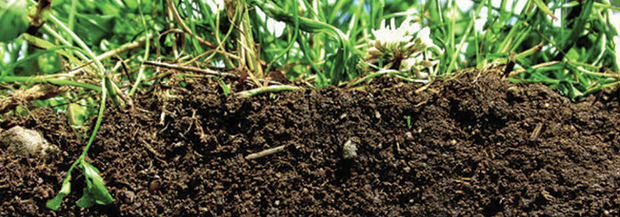 many factors to consider when planning a garden. Sunlight, position, and the supply of nutrients to your plants all need attention. Soil is a great place to begin our journey and April is the time to get your soil ready for the winter growing season ahead.
Soil has five main components. They are utterly co-dependent (in a good way):
Micro-organisms and other living creatures
Soil is very much alive; in a handful of healthy soil you can expect to find more micro-organisms than there are people on the planet. Categories of these include bacteria, actinomycetes, fungi, algae and protozoa. Their secretions are beneficial to plant growth.
Inorganic mineral components
Don’t let the word inorganic scare you, these compounds are naturally occurring in the earth from weathered rocks; ‘inorganic’ means ‘did not come from a living organism’. Your bodily functions require minerals, as do plant functions. Talk to your naturopath about the functions of copper, boron, magnesium and manganese in your body and interestingly, your brain.
Organic materials
Leaf litter broken down on the rainforest floor is what produces organic material in this fertile soil. We can replicate this by adding compost and mulch to the garden bed.
Water
A soil’s ability to retain moisture is dependent upon the types of particles in the soil and the presence of organic material. It may seem obvious but it’s important to remember that sandy soils do not retain moisture well, clay soils may not allow enough moisture to pass through, and compost is perfect but is difficult to moisten once it has dried out.
Air
Worms create pockets of air in the soil and decomposed plant roots are vital to the life of beneficial micro-organisms. An aerated soil is a healthy growing environment. Anaerobic, or non-aerated soils, create bad smells and poor growing conditions by breeding the wrong types of bacteria.
All of these components will determine the pH of a soil. While most edibles will grow in a pH of 6 to7.5, 6.4 is the optimum for most vegetables and herbs to uptake the nutrients they require from the soil and pass them on to you.
This is just the tip of the iceberg. Soil and its links to human nutrition, health and societal wellbeing are fascinating to me. There are many books, peer reviewed journals and workshops on the topic and I love to chat about it.
Happy gardening. Tegan McBride, Garden of Tegan. Phone: 0402 853 903 Email:tegan@gardenoftegan.com.au You can find more info at www.gardenoftegan.com.au or on Facebook.