


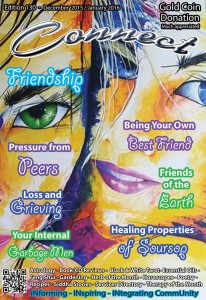
 COVER ARTIST: Michelle Toohey
COVER TITLE: Forever Young
MEDIUM: Acrylic on canvas
CONTACT: chellesartworks@gmail.com
www.chellesartworks.com
NEW Gallery open Friday, Saturday and Sunday
8am – 4pm 9/471 Varley St, Yorkeys Knob.
Phone: 0407 959 280
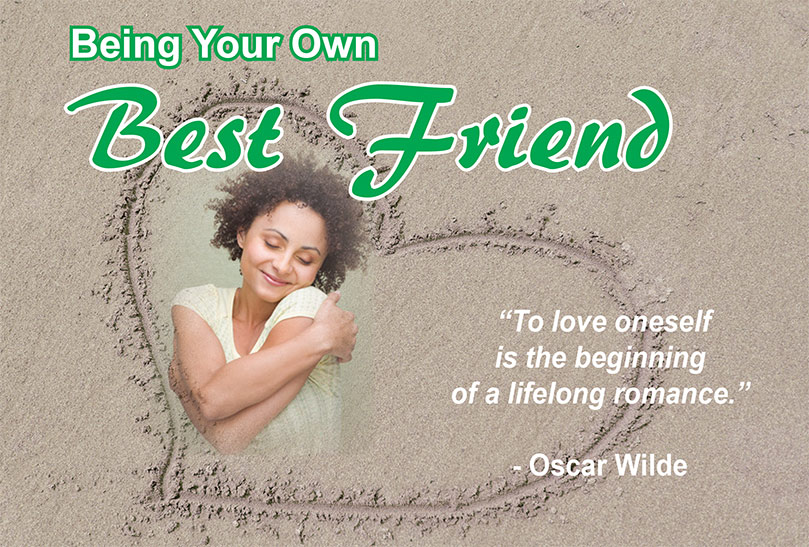
With the often hectic pace of modern life, and our collective struggle to make sense of the escalating violence and environmental vandalism we witness daily in our news feeds, it is easy to forget that the one person who really needs our love, support and unconditional friendship the most, is our self. When we are emotionally overwrought, physically exhausted and mentally confounded we are unable to be a supportive and loving friend to anyone else. In the name of friendship, we owe it to ourselves and others to be our own best friend.
It sounds strange doesn’t is? Be your own best friend! How can we go about doing that? What methods do we use? It calls the whole notion of friendship into question, what does it mean to be a best friend anyway?
If we think of friendship as a special bond between people, one which allows us to respond to the hopes, needs and fears of another human being, that makes us care deeply about their situation and their feelings, their health and finances, family, home and pets we begin to see how this could be applied to ourselves. Of course we care about these things in our own lives, but do we attend to caring for our own self with as much devotion and attention as we give to our friend?
Consider your daily routine, is there time set aside for you to be alone in peace, to meditate, do yoga, walk on the beach or through the trees? Do you prioritise your personal health and creative space? How about getting enough sleep – anybody?
Creating a routine that honours our specific personal needs is far from being a selfish act, it is necessary for the mental and physical health that is required in order to be a good friend to anyone. The ways we interact with others are often influenced by our unconscious mental and emotional conditioning, and when we are reacting unconsciously we can hurt our friends and our relationships with them. Taking time alone to just be yourself, getting to know yourself deep down, who you are as a being, as a person will enable you to participate in your relationships with others from a place of grounded authenticity. If we are honest with ourselves, we will find that we have many less than desirable traits and behaviours, for these we can seek the support of therapists, healers and counsellors in order to become the best possible version of ourselves.
Being a best friend is a responsibility and personal commitment to excellence in relating to and supporting another human being – or other animal. When we are less than our best we can inadvertently fuel emotional and mental conflict in these close relationships, which may be difficult to have open communication about. Rather than allow ourselves to continue adding to the suffering in the world, we need to take responsibility for our part to play in any given situation, and for doing what ever it takes to lift our game. With an attitude of self-responsibility and willingness to seek support for what ever part of us that suffers and thus causes more suffering, we become a good friend to ourself and therefore a better friend to others.
When we are sharing our joys and sorrows, giving and receiving the love and support of our friends we are reminded of the intrinsic goodness of the human heart. The encouragement of those we care about gets us through some of the biggest challenges in our lives. Our capacity for generosity and positive regard towards others is based in our relationship with our selves. If we have made a choice to love, honour and respect ourself and our own needs, we will be empowered in our loving support and respectful interactions with those who are already, or will one day be our good friends.
The time it takes to become your own best friend will benefit all the other best friends you will ever have.
By Glistening Deepwater.

A man went to his rabbi and said, “You know, all my life I’ve heard so much about Talmud, yet I’ve never studied it. Can you teach me?”
The rabbi looked at the man and carefully considered his answer. “Well, you know, Talmud is not just an ordinary kind of study. It’s very different from anything you’ve been exposed to, and it takes a certain kind of mind. Let me ask you a few questions, and then we’ll see whether you have such a mind.” The man agreed.
“Imagine this situation,” the rabbi said. “Two men come down a chimney. One comes out clean, and one comes out dirty. Which one washes himself?”
The man thought about it for a moment and said, “Well, it’s obvious. The dirty man washes himself.”
“Well, I’m not so sure,” the rabbi said. “Let’s think about it. You say the dirty one washes himself. But the dirty one would look at the clean one and see how clean he is and assume that he’s also clean. The clean one would look at the dirty one and see how dirty he is and assume that he’s dirty also. So the clean one would probably go and wash himself.”Before the man had time to respond, the rabbi said, “So, let me ask you another question. Two men come down a chimney, and one comes out clean and one comes out dirty. Which one washes himself?”
The man said,“Well, Rabbi, you just explained it to me. The clean one looks at the dirty one, and the dirty one looks at the clean one, so the clean one washes himself because he thinks he’s dirty.”
The rabbi said, “Well, I’m not so sure. Let’s think about it. If the two men go over to the washbasin and there’s a mirror, the clean one would see that he’s clean and the dirty one would see that he’s dirty, so the dirty one would wash himself.”
The man gave the rabbi a puzzled look.
“Let me ask you another question.” The rabbi said, “Two men come down a chimney.One comes out clean and one comes out dirty. So, which one washes himself?”
The man looked at the rabbi. “Now, Rabbi,” he said, “I really don’t know how to answer. I’m all confused. I mean, the first time I explained it one way and you said, ‘No, it’s the other way.’ Then I said that it’s the other way, and you said. ‘No, no, it’s the first way.’ So, frankly, I don’t know what to answer.”
The rabbi said, “Well, you see, maybe you don’t have the right kind of mind to study Talmud. Because what you should have answered is, ‘How is it possible that two men should come down the same chimney and one comes out clean and one comes out dirty?’”
Universal Storyteller.