

 Cover Artist: Cristian Ortiz of SIUX ART
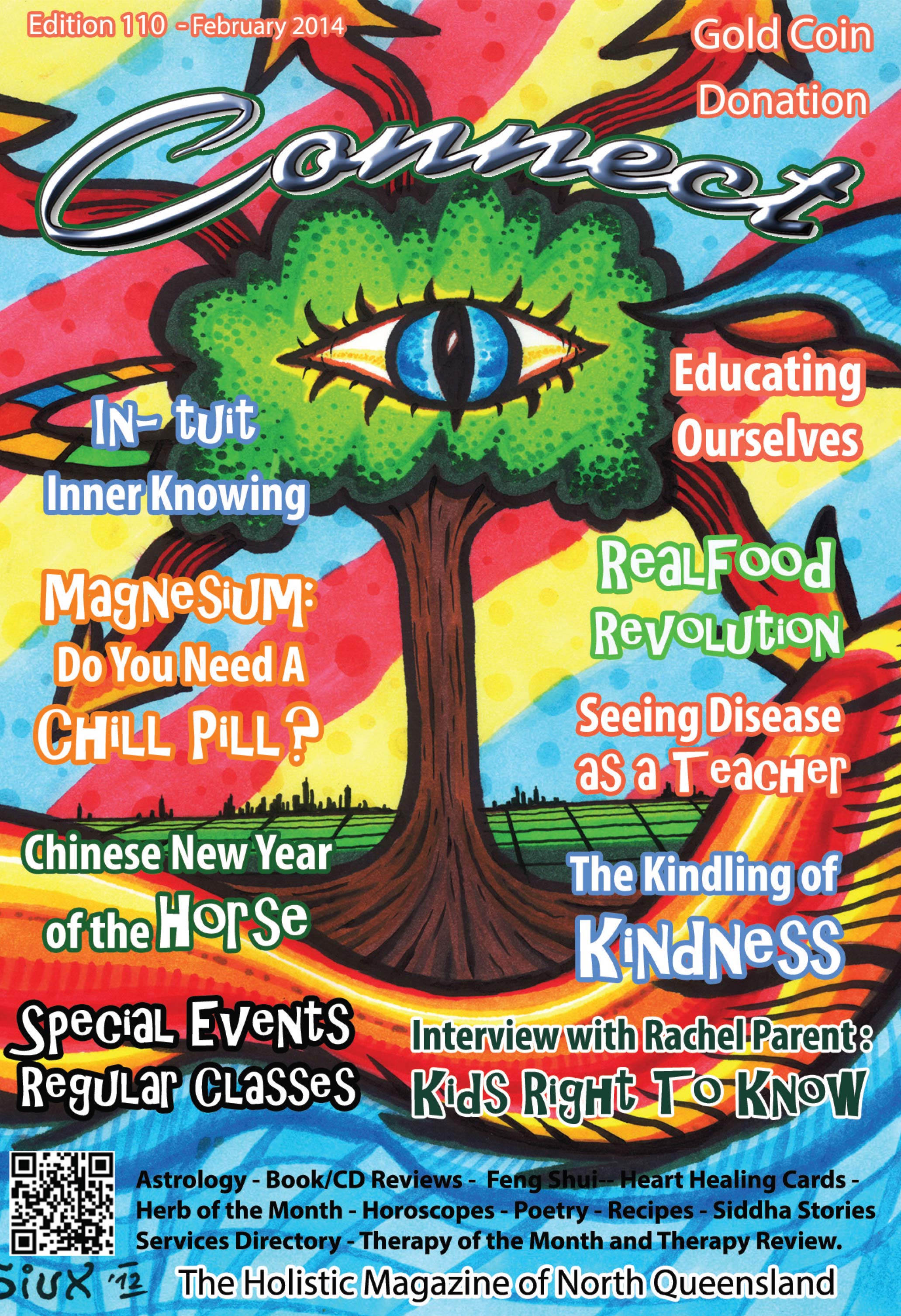
Title: Tree of Knowledge:
Medium: Illustration Markers on paper
Contact: www.s-i-u-x.com
Facebook: Siux-Art
FEATURE ARTICLE
Education for Life
The term ‘education’ is originally from the root word ‘educare’, which means ‘to bring forth the innate wholeness in a person’. (Not regarding the individual as an empty vessel that the teacher fills).
As a new young mother in what was then fairly remote North Queensland I was keen to learn all I could about education in a practical sense, not the dry theories I had studied in becoming a teacher. I was responsible for this brand new little being and wanted all the knowledge I could get to help him bring forth his potential.
I came across Maria Montessori’s work through a friend in Sydney who had arranged a beautifully ordered environment for her child. I was intrigued and found The Absorbent Mind, which became my guide. Maria had trained herself to be highly observant through her studies for medicine, before the time of X-rays. She graduated from engineering and medicine and was assigned to work in a mental asylum with ‘retarded’ children who were not expected to be able to learn. She was greatly influenced by Itard and Seguin, who had developed sensory materials to educate the ‘wolf child’, back into the human world. From her observations she realised the children were not incapable of learning, but starved of stimulation. She based her ideas of education around self-chosen activity within a prepared environment. It wasn’t long before the children surpassed normal children through their work with sensory materials and self-motivation. She observed their thirst for self-motivated learning, and noticed that perfecting themselves was the driving force. The adults were primarily there to guide and connect them to their immediate sensory environment (which included their garden).
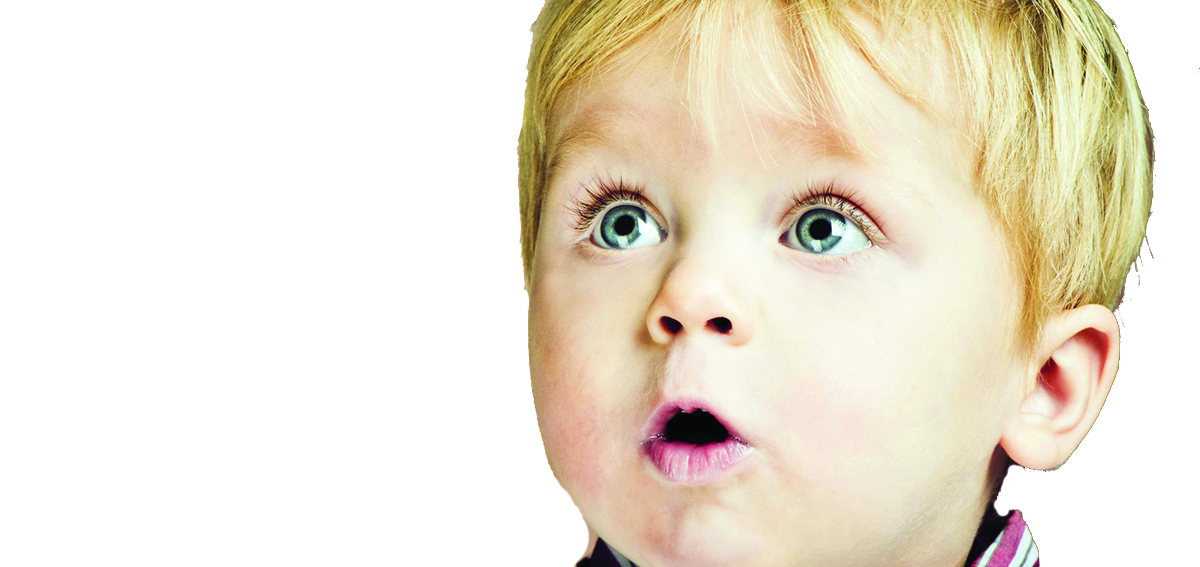 So for my growing young child I attempted follow Maria’s principles, to observe and follow where his interest led. Learning to become an observant adult with humility enough to ‘guide not control’, and knowing when to look out for the sensitive periods when learning was opportune, created an environment that followed his interests and developmental needs. This made his early education enjoyable for both of us. There was no time or opportunity for boredom or attention-seeking behaviour, and there was never a ‘time out corner’. The goal was not to correct, control or humiliate, but to aid in his developmental phases and witness his pleasure of achievement: to be an advocate for this being who came into the world with such capacity and potential. Children know what they are interested in and will learn if we can get out of the way and observe what is needed to aid them. This approach to education begins at birth, and is still revolutionary. Mass education, perpetrated by market economies to keep the masses quiet and produce compliant workers, is not designed to bring forth the potential whole being.
It has been estimated an average child in the US may spend up to seven hours a day viewing, often in place of physical activity or parent interaction. ‘Moodiness, emotional outbursts, incoherent speech, strange cravings and an inability to focus on tasks’, is the way one parent described her toddler after watching a two-hour Disney movie. If that sounds more like drug withdrawal behaviour, it is. Video games and screen games are fast-pacing and provide instant gratification and constant rewards, unlike real life where satisfaction comes from effort and a job well done. The screen is an artificial environment.
Like any other addiction, it creates changes in the brain chemistry by the release of dopamine, the neurotransmitter known as the pleasure chemical. Researcher Professor Salamane refers to it as the motivational chemical, and states that low levels make people and animals less likely to work for things.
To become the whole being, young growing brains require broad horizons in order to learn the principles by which the real world operates, to integrate sensory information and process feelings through human interactions.
– Teach children about balance and flexibility as the key to life.
– Have limited games time so it does not become addictive behaviour or child minding.
– Expand their horizons; observe where their latent interests lie.
– Provide other options that involve whole body sensory experiences.
– Change habits to be more present, and have device-free times – like enjoying nature together.
– Prioritise time and opportunity for real life, hands-on interactive physical experiences.
– Do work that is rewarding in and of itself: house-work is full of skills the young child will love to do early on if given the opportunity to learn.
The child loves the adult and wants to emulate. Make enough room for them to participate in the myriad of life skills and whatever brings you joy. Build up interests in a variety of skills that you share together: go camping; create a magic garden; plant seeds in pots; build things like animal houses or tree houses together. Explore nature up close, look for crystals, make rhythm and music. Having real life adventures and doing things you love with the child helps them to become happy, whole beings. They experience the satisfaction and gratification from their own real life efforts. Interact with respect and empower them to think for themselves. It is an educational approach that nurtures the child to follow their true calling and a love for lifelong learning.
Ardyn Masterman Dip Mont., NES practitioner, Rebirther, Kahuna massage, Sailor
REGULAR FEATURE
Herb of the Month – Tribulus
Traditional medicines of India and China have long valued tribulus for its ability to energise and revitalise. In recent times it has become popular for athletes and people who work out, and is a very popular herb for fertility and libido.
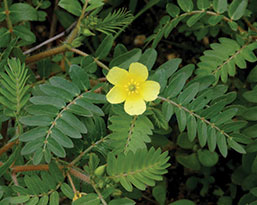 Tribulus is a groovy-looking flowering plant, which grows in warm tropical regions.
As well as increasing libido and fertility, tribulus is thought to help with erectile dysfunction, to lower cholesterol and has anti-viral and anti-bacterial properties. Other traditional uses are for urinary and reproductive problems as well as a mood enhancer.
Tribulus is believed to protect the body against estrogenic toxins. Natural estrogens are responsible for female sexual development, and play a role in fertility and pregnancy. Too much of this hormone for either sex creates problems with the nervous system, immune system, sexual development and even cancers. Many synthetic chemicals unfortunately mimic estrogen in the body. They mess with the production of natural hormones and cause a toxic buildup. They can be found in pesticides, plastics, household cleaners and birth control pills, and so are hard to avoid. Even if you do your very best to avoid contact with these, they end up in waste water, as all the women taking birth control excrete it, (also from animal waste and fertilisers) and these eventually make it into the drinking water. So clearly, finding a herb that you can take to protect the body against these endocrine-disrupters is welcome.
 I first came to know about tribulus because my herbalist friend, who is a skinny guy (sexy too, just in case he reads this and gets offended), was taking it regularly and started working out, and he got a lot more musclier. This effect is thought to be because tribulus contains a compound called protodioscin, which is a precursor to testosterone, the male sex hormone associated with muscle tone, stamina and strength. (Also produced to a lesser degree in women’s ovaries). High testosterone is thought to be involved in high sexual desire, hence the aphrodisiac effect, and the protodioscin also dilates blood vessels, allowing for more blood flow. And when more blood can reach the penis, stronger erections can occur, so this explains the use in treating impotence.
Tribulus therefore could be of use to men going through andropause (the effects of testosterone declining with age, in the same way that women go through menopause, when estrogen and progesterone levels decline). At this time, some men experience weight gain, lower sex drive, erectile dysfunction, fatigue and depression.
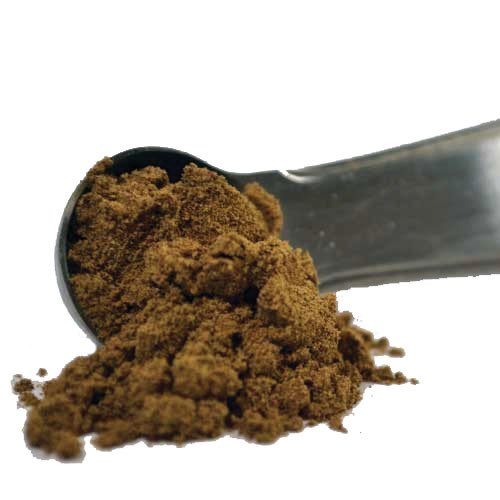 What I didn’t know until I started research for this article is that tribulus has many wonderful benefits for women too. A study into the effects of tribulus on female libido found better results than traditional hormone therapy. Another study found positive results in normalising ovulation. A group of infertile women who did not ovulate were given tribulus; 67% started to ovulate after 2-3 months of consistent use and 6% of these women went on to conceive naturally. Another group of women in the same study were given pharmaceutical ovarian stimulants, and had a higher rate of conception, but experienced significantly higher side effects.
Studies have found it useful to both sexes to increase sex hormone production, increase sexual desire, tone reproductive systems, and in men increase sperm count, mobility and health.
Tribulus combines well with other herbs, depending upon the effect you are going for. For lack of libido, many people also take maca and damiana. For male sexual dysfunction, saw palmetto, maca and ashwagandha are popular. Best results with this herb are reported by men who use it for 3-6 months. For women it has shown best results by using it from days 5-14 of the menstrual cycle. (Once menstruation has finished, up to ovulation.) It should not be used by pregnant women, men with enlarged prostate, or anyone with hormone-dependent conditions, such as breast or prostate cancers. Some people report that it gives them an upset stomach, but this can usually be remedied by taking it at the same time as food. Tribulus is toxic to sheep, (I’m tempted to insert a Kiwi joke here, but that’s just bad taste). Talking of bad tastes, tribulus is certainly not delicious; in fact many people choose capsules so they can avoid tasting it. Try putting it in smoothies with banana and a little honey. Much strength, vitality and virility to you!
Ella Shannon is a qualified Yoga teacher, Reiki master, and Addiction Counsellor with a passion for natural health and wellbeing, and is the proprietor of Port Douglas Happy Herb Shop on Macrossan Street. (07 4099 6313) This article is NOT intended to diagnose, treat, cure or prevent any disease or illness. www.happyherbcompany.com/portdouglas