

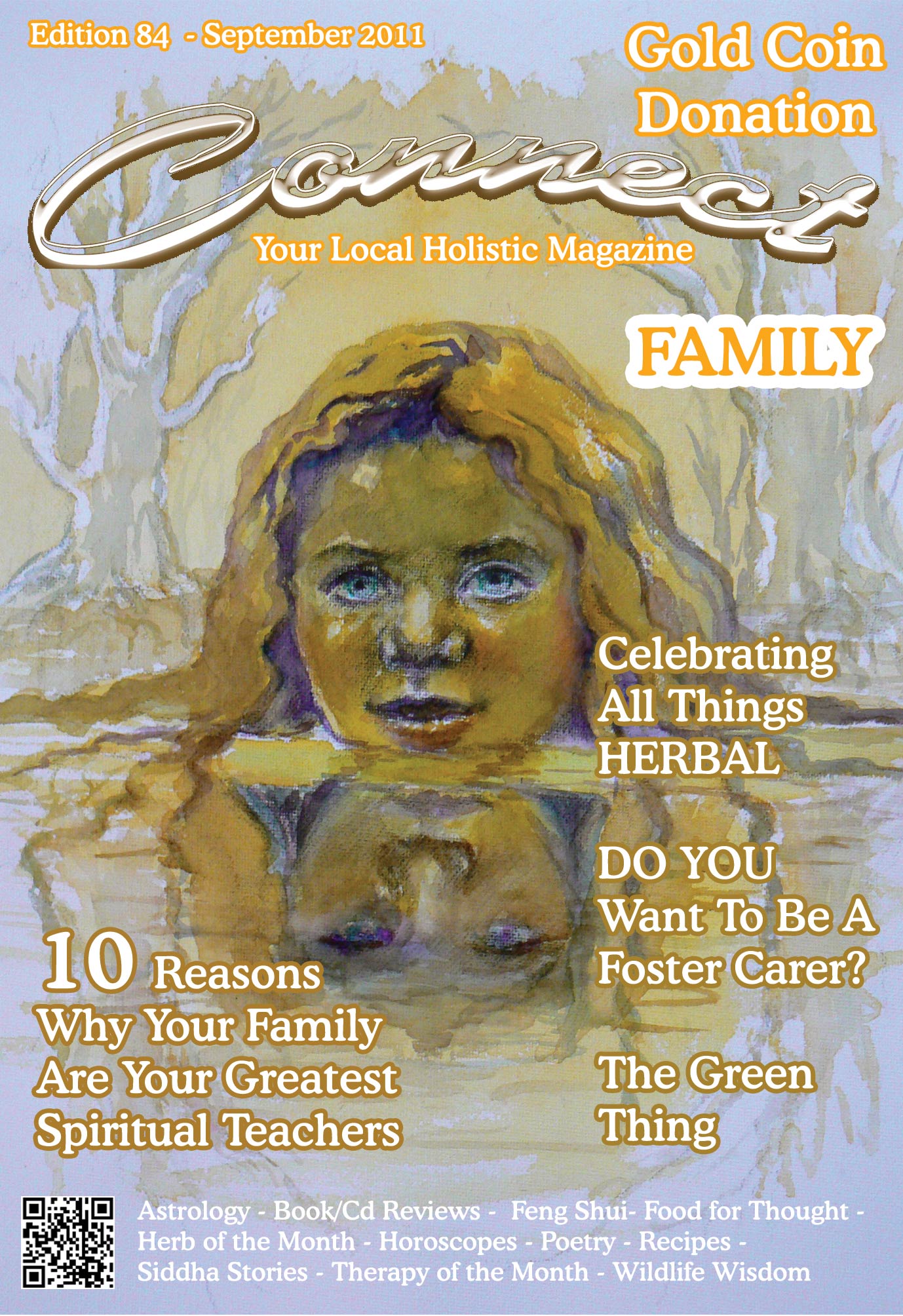
[singlepic id=9 w=320 h=240 float=left]Artist: Jeanette Sellwood
Title: Reflections
Medium: Watercolour
Contact: www.freespiritartist.com.au
FEATURE ARTICLE
Family
The word comes from the Latin: familiar, and is described as:
a. A fundamental social group in society typically consisting of one or two parents and their children;
b. Two or more people who share goals and values, have long-term commitments to one another, and reside usually in the same dwelling place;
c. All the members of a household under one roof.
According to Wikipedia, in most societies it is the principal institution for the socialisation of children.
In answer to the question, ‘why do we have families?’ one answer was: ‘It is a natural way of protection because society is so big. Families automatically protect each other, based on consanguinity (blood relations) and as much as the level of protection varies from family to family, depending on wealth and status etc; fundamentally families ought to be there for you in your time of need.’ If you are in a family unit, pause for a moment and think why you have chosen to be part of a family. Family is a give and take thing – sharing, growing, enjoying, fulfilling, and sometimes, making mistakes. But as a rule, humans are not meant to be loners, and so we have a go, sometimes more than once, at being a family.
 Here are some of the major findings from the recently published Relationship Indicators Survey 2011. This is a joint initiative of Relationships Australia and Credit Union Australia.
• When asked to identify the three most important relationships in our lives, in order were: 1) sons or daughters; 2) spouses; 3) parents. Predictably, older couples included grandchildren in their list of three. It’s interesting that once children come along, the priorities of the individual parents shift from each other to that of their children.
• And why do people choose to marry? The main reasons given were love, companionship and signifying a life-long commitment. The negative impacts on relationships were listed as stress, work pressures and lack of time to spend together. And going further, the main reasons for relationship breakdown were financial stress, communication difficulties, different expectations and values, and lack of trust.
• Social networking (the use of Facebook, Twitter, blogs etc.) is playing some part in relationships, but so far, not significant – 27% said it had a positive impact, 16% a negative impact and 57% said no impact (all survey respondents are over 18). I suspect that increasingly, tensions will occur between parents and children in this area, the latter incorporating social networking as an important part of their everyday life, while their parents see social networking as intrusive.
One of the biggest challenges we face is how to balance the demands of family, friends, and career. While we want happy and fulfilling lives outside of work, we often have to make personal sacrifices in order to achieve our career aspirations. How do you balance those sacrifices so they don’t greatly interfere with your personal goals? How do you fit roles such as spouse, parent and friend into an already hectic schedule? Since time is precious, keeping a balance between the two worlds can be a challenge. Fortunately, with proper planning, balance is possible. It’s all a matter of priorities, which may vary from day to day and week to week. And of course, support and help from all other members of the family is vital.
Some tips on building a good family relationship are to involve every member of the family in the following: take the time to talk to each other regularly, not just when life is difficult; be willing to adapt, or live with what you can’t change; have parent time alone together without the kids; make decisions together, set family goals, respect and trust each member of the family; and finally, choose your battles – don’t sweat the small stuff.
Mike Friganiotis, Community Education officer, Relationships Australia, Far North Queensland. At Relationships Australia, if you need help, we are here for you, whether it be how to improve your family relationships, or how to better manage separation if you have decided on that option. We are just a phone call away – 1300 364 277.
REGULAR ARTICLE
Herb of the Month – Raspberry Leaf
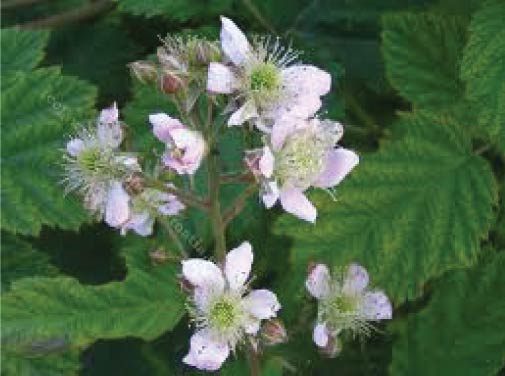
Raspberry is a perennial, with finger thick canes 1-2 metres tall covered with soft prickles, that is native to Europe; but is now found all around the world. In spring, white flowers are followed by luscious red fruit.
In ancient times, raspberry was given its Latin name ‘rubus’ meaning bramble and ‘idaeus’ from Mt Ida in Greece where raspberry grew in abundance.
 Medicinal Uses
Traditionally raspberry leaf has been used for treating wounds, diarrhoea, fevers and ulcers. It is still considered valuable for its astringent action and the tea is used during the last ten weeks of pregnancy. Several of the plant’s constituents and important vitamins and minerals tone and relax the pelvic and uterine muscles and stimulate them, thus regulating the uterus action. The tea is known to ease the pain of childbirth and shorten the labour. It also aids in cleansing afterbirth from the uterus, and is drunk to enrich and increase the flow of breast milk.
The astringent properties of raspberry leaf make it a good remedy for excessive bleeding during menstruation, and easing pain.
Raspberry leaf is also used for burns, gargle for sore mouth and throat, tonsillitis, inflammation of the eyes, colds and flu, haemorrhoids, cramps, prostatitis, stimulating circulation and stomach, liver, blood, kidney, lung, venereal and skin diseases.
Scientific Studies
A study published in the Journal of Midwifery and Women’s Health in 2001 found that women who drank raspberry leaf tea had shorter labour, and fewer of their babies were delivered by forceps.
Another study, published in the Australian College of Midwives Journal, stated: ‘…this study seems to indicate that women who ingest raspberry leaf might be less likely to receive an artificial rupture of their membranes, or require a caesarean section, forceps or vacuum birth than the women in the control group.’
Preparation of Tea
Steep 1 teaspoon to 1 cup water for 5 minutes, sweeten with honey if desired. This preparation can be taken once or twice a day.
Cautions and Warnings
Safe dosages for children under the age of 6 and for persons with liver or kidney disease have not been established.
Do not let brew longer than 5 minutes. Do not take in early pregnancy.
Heather Fardy is the owner of The Happy Herb Shop – Port Douglas. 3/34 Macrossan St, Port Douglas (07) 4099 6313. Email: Store.portdouglas@happyhighherbs.com
References: www.mountainroseherbs.com/learn/raspberry_leaf.php
Shipard, I. How can I use herbs in my daily life?